Key Takeaways
- check_circle Tribal lenders operate under sovereign immunity, bypassing state rate caps entirely.
- check_circle APRs typically range 200%–600%; a $500 loan can cost $150–$200 in fees over 14 days.
- check_circle The 5-step online process takes under 10 minutes with decisions in seconds.
- check_circle Federal TILA law requires full APR disclosure before you sign any loan agreement.
- check_circle Always verify lender legitimacy via BIA registry and NAFSA before applying.
list Table of Contents expand_more
Which tribal loan path fits your situation?
Tribal lending covers several very different situations. Jump straight to the guide that matches yours:
What Makes Tribal Loans Different from Other Loans
Definition: A tribal loan is a consumer loan — payday or installment — issued by a financial entity owned by a federally recognized Native American tribe. The lender operates under tribal sovereign immunity, which gives it the authority to lend in all 50 states without complying with state rate caps, licensing requirements, or rollover restrictions.
Three things separate tribal loans from every other consumer lending product on the market: who issues them, what law governs them, and where they can operate. Understanding all three is essential before you apply.
Who issues them: Tribal loans come from financial entities that are wholly owned and operated by a federally recognized Native American tribe. There are 574 federally recognized tribes in the United States.[1] Each tribe is a sovereign nation under U.S. federal law. When a tribe establishes a lending arm, that entity inherits the tribe's sovereign status and can lend under tribal law rather than state law.
What law governs them: State consumer protection laws — including interest rate caps, rollover limits, cooling-off periods, and licensing requirements — do not apply to tribal lenders. The tribe's own regulatory code and federal law govern operations. This is why tribal lenders can charge APRs of 200%–600% in states where payday lending is capped at 36% or banned entirely. For a deeper look at the legal landscape, see our article on tribal lending regulations and are tribal loans legal.
Where they operate: Because tribal lenders are not subject to state licensing requirements, they can and do serve borrowers in all 50 states — including states like New York, Georgia, and North Carolina where conventional payday lending is illegal. A borrower in any of those states can apply for a tribal loan online and receive funds the next business day.
Two product types exist under the tribal lending umbrella: tribal payday loans, which are due in a single lump sum on your next payday (14–31 days), and tribal installment loans, which spread repayment across multiple scheduled payments over 4–24 months. The installment structure is increasingly common because it reduces per-payment size and default risk, though total interest paid increases over a longer term.
For a complete overview of the tribal lending ecosystem including lender types, regulation, and borrower protections, see our complete tribal lending guide.
Sovereign Immunity: The Legal Foundation
Sovereign immunity is the legal doctrine that protects federally recognized tribes from most state and local laws. It is the same principle that allows tribes to operate casinos in states that otherwise prohibit gambling. In the context of lending, sovereign immunity means the tribal entity that issues your loan is exempt from your state's interest rate caps, its payday lending regulations, and its consumer protection statutes.
The doctrine has deep roots in U.S. law and has been affirmed repeatedly by federal courts. Tribes are not merely businesses with a legal loophole — they are sovereign governments operating within the United States under a distinct legal framework established through centuries of treaties and federal statute. The NAFSA (Native American Financial Services Association) represents tribal lenders who adhere to consumer protection standards within that framework.[2]
What Sovereign Immunity Does NOT Cover
Federal laws still apply to every tribal lender. The Truth in Lending Act (TILA) requires disclosure of APR and total finance charges before signing.[3] The Equal Credit Opportunity Act prohibits discrimination. The CFPB and FTC both hold enforcement authority over tribal lenders engaged in unfair or deceptive practices.[4]
What this means for your loan agreement: Nearly every tribal loan contract includes an arbitration clause and a tribal jurisdiction clause. These provisions mean that if a dispute arises, it will be resolved through binding arbitration under tribal law — not in your state's courts. You typically waive your right to participate in a class action lawsuit. These clauses are legally enforceable in most circumstances.
"Rent-a-tribe" fraud: Not every lender claiming tribal affiliation is legitimate. In "rent-a-tribe" schemes, non-tribal businesses pay a tribe a fee to use its name while retaining actual control of the lending operation. Federal courts and the FTC have repeatedly shut down these arrangements and found that sovereign immunity does not apply when the tribe is not the true lender. Verification is therefore essential — covered in the How to Verify a Tribal Lender section below.
How the Application Process Works (Step by Step)
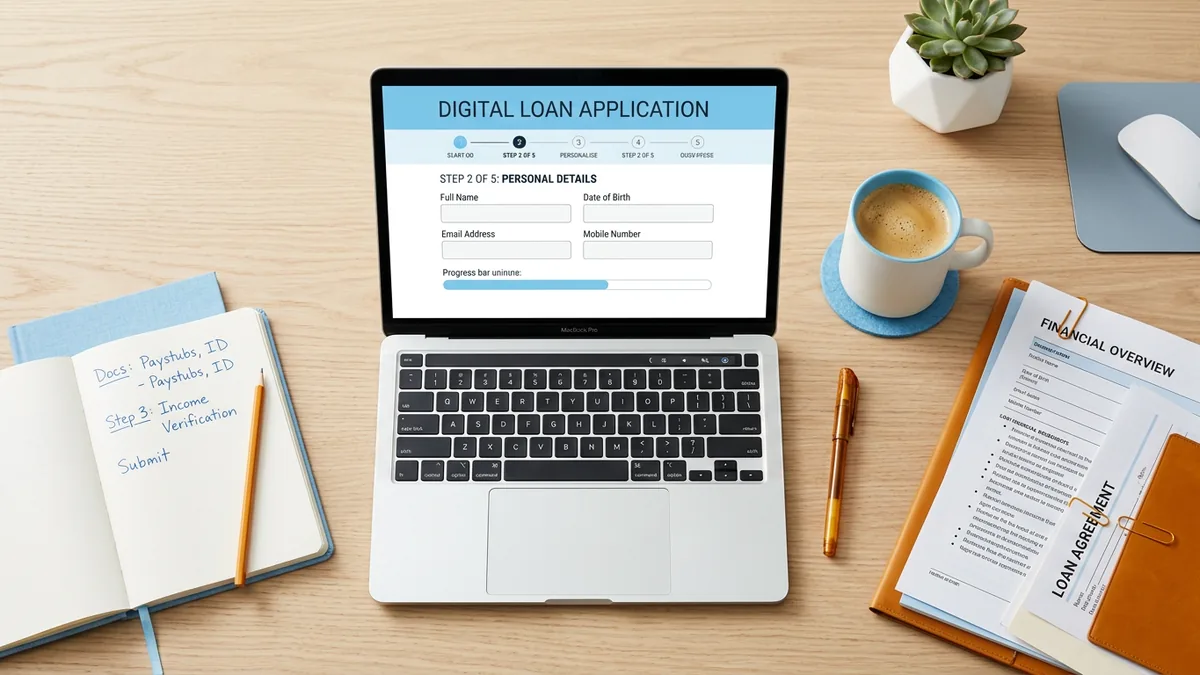
The entire tribal loan process is online — no branch, no fax, no in-person meeting. From first visit to funds in your account, most borrowers complete the full cycle in under 24 hours. Here is every step in sequence:
-
1
Verify the Lender Before Anything Else
Confirm the lender is affiliated with a real federally recognized tribe using the BIA registry and NAFSA directory. Do not enter personal information until verification is complete. This step takes 5 minutes and can protect you from scams and rent-a-tribe fraud.
-
2
Review the Rate and Cost Estimate
Legitimate tribal lenders display a loan calculator before you apply. Enter your desired amount and see the total finance charge and repayment amount. If no cost estimate is available before you start, proceed with caution — TILA disclosure is a legal requirement.
-
3
Complete the Online Application (5–10 Minutes)
Fill in your name, address, date of birth, Social Security number, income amount and source, employment status, and checking account and routing number. All data is submitted via an encrypted connection. Most forms take 5–10 minutes.
-
4
Receive an Automated Decision (Seconds to Minutes)
Most tribal lenders use automated underwriting that checks income, bank account behavior, and specialty credit bureaus (TeleTrack, FactorTrust) — not Equifax, Experian, or TransUnion. Decisions arrive in seconds to a few minutes. Some applications trigger a manual review if the automated system flags inconsistencies.
-
5
Review the Loan Agreement — Do Not Skip This
Before signing, confirm the document includes: (a) the APR as a percentage, (b) the total finance charge in dollars, (c) the total of all payments, (d) each payment due date and amount, (e) ACH authorization terms, (f) prepayment and late fee policies, and (g) the arbitration clause and tribal jurisdiction statement. All of these are required by TILA.[5] If any item is missing, do not sign.
-
6
Sign Electronically
Your e-signature is legally binding. Once signed, you have entered a legal loan contract. Download or screenshot the signed agreement before closing the browser — you will need it if any dispute arises.
-
7
Receive Funds via ACH Direct Deposit
Funds are sent to the checking account you provided. Standard ACH transfers arrive the next business day. Applications submitted before the lender's daily cutoff (typically noon–2 p.m.) may fund the same day. Weekend and holiday applications are processed the next business day. Some lenders offer an optional instant transfer for a small fee.
Key Stat: Average APR on Short-Term Tribal Loans Is 391%
The CFPB reports that the average APR on a 14-day payday product is approximately 391%.[6] Tribal short-term loans often fall within or above this range. Calculate your total repayment amount in dollars before you sign — not just the APR percentage.
What Tribal Lenders Review Before Approving
Tribal lenders use alternative underwriting — their approval criteria are based primarily on income and bank account behavior rather than traditional credit scores. This is why tribal loans for bad credit are accessible to borrowers who would be declined by banks and most online lenders. Here is what the underwriting actually evaluates:
| Factor | What the Lender Checks | Typical Minimum |
|---|---|---|
| Income | Regular deposits into checking account; pay stubs or benefits letter | $800–$1,000/month |
| Bank Account | Active checking account; no excessive overdrafts; ACH-compatible | Active for 30+ days |
| Specialty Bureau | TeleTrack or FactorTrust history; any current defaults flagged | No open defaults |
| Identity | SSN verified; government ID confirmed; address validated | U.S. resident, 18+ |
| Bankruptcy | Active bankruptcy filing checked | No active bankruptcy |
| FICO Score | Usually not checked via major bureaus | No minimum required |
Because most tribal lenders do not pull a hard inquiry from Equifax, Experian, or TransUnion, applying will not hurt your traditional credit score. The soft or alternative-bureau check they use does not appear on your standard credit report. This makes tribal loans one of the few credit products accessible to borrowers with scores below 580.
The most common denial reasons are: no verifiable income, active bankruptcy, an open unpaid loan flagged in TeleTrack, a checking account that does not accept ACH, or mismatched identity information. If you are denied, the lender is generally required to provide an adverse action notice explaining the reason.
Costs, APR, and Fees Explained
The APR on a tribal loan is the single most important number to understand before you borrow. A high APR on a short term means a significant dollar cost even on a small loan. Here is how the math works and how tribal loan costs compare to other lending products.
APR Cost Breakdown: $500 Loan
| Loan Type | Typical APR | Term | Total Repay on $500 | Cost in Fees |
|---|---|---|---|---|
| Tribal payday loan | 391%–780% | 14 days | $625–$650 | $125–$150 |
| Tribal installment loan | 200%–400% | 6 months | $750–$900 | $250–$400 |
| State-licensed payday loan | 200%–400% | 14 days | $560–$600 | $60–$100 |
| Bad credit personal loan | 36%–155% | 12 months | $590–$780 | $90–$280 |
| Credit union PAL | Up to 28% | 6 months | ~$540 | ~$40 |
A common fee structure at tribal payday lenders is $25–$30 per $100 borrowed on a 14-day loan. A $30 fee per $100 on a 14-day product translates to a 780% APR. At $25 per $100, the APR is approximately 650%. These numbers are required to be disclosed under TILA before you sign the loan agreement.[3]
Beyond the base fee, watch for these additional charges: origination fees (sometimes bundled into the finance charge), late fees ($15–$30 per late payment), returned payment fees ($25–$35 if an ACH debit fails), and prepayment — most tribal lenders allow early repayment with no penalty, but confirm this in your agreement.
Loan Type Comparison
| Feature | Tribal Loan | State-Licensed Payday | Personal Loan (Online) |
|---|---|---|---|
| Legal Authority | Sovereign immunity | State license | State + federal |
| Available in all 50 states | Yes | No (varies by state) | Most states |
| Typical APR | 200%–600% | 200%–400% | 36%–155% |
| Loan Amount | $100–$5,000 | $50–$1,000 | $500–$35,000 |
| Credit check (major bureaus) | Usually no | Usually no | Yes (hard or soft) |
| Funding Speed | 1 business day | Same day–1 day | 1–3 business days |
| State rate cap applies | No | Yes | Yes |
| Dispute resolution | Tribal arbitration | State courts | State courts / arbitration |
How Repayment Works
Repayment on tribal loans is handled exclusively through ACH automatic debit from the checking account you provided at application. On each scheduled due date, the lender initiates an electronic withdrawal for the payment amount. You do not need to mail a check or log in to pay — but you do need to ensure the funds are in your account before the debit date.
Payday Structure (Single-Payment)
A tribal payday loan is typically due in one lump sum — principal plus all fees — on your next payday, usually 14–31 days from the date of funding. For a $500 loan at $30 per $100, the single payment due is $650. If that payment cannot be made in full, some lenders offer a rollover or renewal — but this extends the loan for another 14-day period at full fees, dramatically increasing total cost. The CFPB has documented that repeat rollovers can cause borrowers to pay more in fees than the original principal.[6]
Installment Structure (Multiple Payments)
A tribal installment loan spreads repayment over a fixed schedule — typically bi-weekly or monthly — across 4 to 24 months. Each payment covers a portion of principal and accrued interest. The per-payment amount is substantially lower than a single-payment product, making it easier to budget. However, the total interest accumulated over a longer term is higher in absolute dollar terms even at the same APR. A $1,000 tribal installment loan at 300% APR over 12 months can total $2,500–$3,000 in repayments.
Prepayment: Most tribal lenders allow you to repay the full balance early with no prepayment penalty. If you can pay off an installment loan ahead of schedule, you will save significant interest. Confirm the prepayment policy in your loan agreement before signing.
ACH authorization: When you sign the loan agreement, you authorize the lender to debit your account for each scheduled payment. If a payment fails (insufficient funds), the lender will typically retry 1–2 times, charge a returned payment fee, and notify you. Your bank will also charge an NSF fee. To avoid this, set a calendar reminder 2 days before each due date and verify your balance.
See Your Rate in Minutes
No credit score impact. No obligation. Funds as fast as 1 business day.
Check My RateHow to Verify a Tribal Lender Is Legitimate
Fraud in the tribal lending space is real. Before submitting personal information to any lender claiming tribal affiliation, run through this 4-point verification checklist. It takes less than 10 minutes and protects you from scams and rent-a-tribe fraud.
Verification Checklist
-
check_circle
Step 1: BIA Federally Recognized Tribes Registry
Search the Bureau of Indian Affairs list of all 574 federally recognized tribes at bia.gov.[1] The tribe the lender claims to represent must appear on this list. If it does not, the lender has no sovereign immunity basis whatsoever.
-
check_circle
Step 2: Official Tribal Government Website
Find the tribe's official government website (typically a .gov or .nsn.us domain). Look for the lending entity listed as a tribal enterprise, economic development arm, or tribally chartered business. If the lender is not named on the tribe's official government page, proceed with extreme caution.
-
check_circle
Step 3: NAFSA Member Directory
The Native American Financial Services Association requires member lenders to meet consumer protection standards including clear TILA disclosures and cooling-off periods for first-time borrowers. Verify the lender at nafsa.net.[2] Not all legitimate tribal lenders are NAFSA members, but membership is a positive signal.
-
check_circle
Step 4: Pre-Application TILA Disclosures
Before you enter any personal information, the lender's website must display: the full APR as a percentage, the total finance charge in dollars, and all repayment terms. This is a federal legal requirement. If you cannot find this information without starting an application, the lender may be violating federal law — stop immediately.
Red Flags to Watch For
- block No tribal name disclosed — the website does not identify the specific tribe or reference a tribal charter number
- block APR hidden until after application — rates are not disclosed before you submit personal information
- block Upfront fees requested — legitimate lenders never charge fees before disbursing your loan
- block No verifiable contact information — no phone number, no physical address, no working email support channel
- block Unsolicited loan offers — legitimate tribal lenders do not call or text you with loan offers; that is a scam pattern
- block High-pressure urgency tactics — "offer expires in 10 minutes" language; legitimate lenders give you adequate time to read the agreement
Federal Consumer Protections That Still Apply
Sovereign immunity removes state-law protections, but it does not remove federal consumer protection obligations. Every legitimate tribal lender must comply with the following federal laws — and if they do not, you have recourse through federal agencies.
-
shield
Truth in Lending Act (TILA / Regulation Z)
Requires lenders to disclose the APR, total finance charge, and all payment terms in writing before you sign. This is the most important federal protection for tribal loan borrowers. If these disclosures are absent, report the lender to the CFPB.[3]
-
shield
Equal Credit Opportunity Act (ECOA)
Prohibits lenders from discriminating based on race, color, religion, national origin, sex, marital status, age, or receipt of public assistance. Applies to all lenders including tribal entities.
-
shield
Electronic Fund Transfer Act (EFTA)
Governs the ACH debits used to collect your payments. You have the right to revoke ACH authorization by notifying your bank and the lender in writing, though you remain legally obligated to repay the loan debt through other means.
-
shield
Fair Debt Collection Practices Act (FDCPA)
If your debt is sold to a third-party collector, that collector must comply with FDCPA restrictions — no harassment, no calling before 8 a.m. or after 9 p.m., no false statements. The original tribal lender is generally exempt from FDCPA (as a creditor, not a collector), but third-party collectors are not.
-
shield
CFPB and FTC Enforcement Authority
Both agencies can investigate and take action against tribal lenders engaged in unfair, deceptive, or abusive acts. You can file a complaint at consumerfinance.gov/complaint or reportfraud.ftc.gov. These complaints create formal records and can trigger investigations.
If a Tribal Lender Violates Your Rights
Document everything in writing — emails, screenshots of the website, copies of the loan agreement. Contact the lender's compliance department first. If unresolved, file complaints with the CFPB and the FTC simultaneously. Even if you cannot sue in state court, federal agency enforcement action is a real and effective avenue for consumer redress.
Frequently Asked Questions
Tribal loans are issued by financial entities owned by federally recognized Native American tribes. The lender operates under tribal sovereign immunity, which allows it to bypass state rate caps and licensing requirements. You apply online, receive an automated decision within minutes, sign an e-loan agreement disclosing the APR and total cost under TILA, and receive funds via ACH direct deposit within 1 business day.
Not exactly. Tribal payday loans and tribal installment loans are both issued under sovereign immunity, but they differ in structure. A payday product is due in a single lump sum on your next payday — typically 14–31 days. An installment product spreads repayment over 4–24 months. Both carry high APRs (200%–600%), but the installment structure lowers per-payment amounts while increasing total interest paid.
Most U.S. residents aged 18 or older can apply. Typical requirements: active checking account, verifiable income of at least $800–$1,000 per month, valid government-issued ID, and a Social Security number. No minimum credit score is required at most tribal lenders. Active bankruptcy or no verifiable income will typically result in denial.
Most tribal lenders deposit funds within 1 business day via ACH. Applications submitted before the lender's daily cutoff (typically noon–2 p.m.) may fund the same day. Weekend and holiday applications are usually processed the next business day. Some lenders charge an optional fee for same-day instant transfers.
Tribal loans typically carry APRs between 200% and 600%, though some lenders charge higher. A common fee structure is $25–$30 per $100 borrowed on a 14-day loan — equivalent to 650%–780% APR. Lenders are required by the federal Truth in Lending Act (TILA) to disclose the full APR before you sign. Never sign a loan agreement that does not state the APR clearly.
Yes. Because tribal lenders operate under sovereign immunity rather than state licenses, they can lend in all 50 states — including states that prohibit conventional payday lending (New York, Georgia, North Carolina, and others). Federal laws such as TILA and ECOA still apply, but state-level rate caps and rollover limits generally do not.
The lender will attempt to debit your account via ACH. If that fails, you may be charged a returned payment fee on top of your bank's NSF fee — typically $50–$70 combined. Late fees and additional collection contact will follow. Contact the lender before missing a payment; many offer hardship extensions. Persistent non-payment can lead to debt collection and credit bureau reporting.
It depends on the lender. Some tribal lenders report payment history to Equifax, Experian, or TransUnion — meaning on-time payments can help and missed payments can hurt your score. Others report only to specialty bureaus (TeleTrack, FactorTrust) or not at all. Ask the lender directly about their reporting practices before signing the loan agreement.
The Bottom Line
How Tribal Loans Work — Summary
Tribal loans work by combining sovereign immunity with fully online lending infrastructure: a tribally owned entity uses its legal exemption from state rate caps to offer high-APR credit in all 50 states, processing applications automatically in under 10 minutes and funding approved loans within 1 business day. The 5-step process — verify lender, review costs, apply, receive decision, sign and receive funds — is designed for speed. The cost, however, is substantial. APRs of 200%–600% mean a $500 loan can cost $125–$400 in fees depending on term and structure.
Before borrowing: verify the lender through the BIA registry and NAFSA directory, calculate your total repayment in dollars (not just APR), and confirm all TILA disclosures are present before signing. Explore credit union PALs (capped at 28% APR) and state-licensed installment lenders first. If a tribal loan is the right fit for your situation, see our complete tribal lending guide and our guide to tribal loans for bad credit. When you are ready, check your rate now — no credit score impact.
Sources
- [1] Bureau of Indian Affairs. Federally Recognized Tribes. bia.gov
- [2] Native American Financial Services Association. NAFSA: Advancing Tribal Financial Services. nafsa.net
- [3] Consumer Financial Protection Bureau. TILA-RESPA Integrated Disclosure (TRID). consumerfinance.gov
- [4] Federal Trade Commission. What to Know About Payday and Installment Loans. consumer.ftc.gov
- [5] Federal Trade Commission. Truth in Lending. ftc.gov
- [6] Consumer Financial Protection Bureau. What is a Payday Loan? consumerfinance.gov
Blue Sky Loans Editorial Team
Financial Content Specialists
Our editorial team is committed to providing accurate, unbiased financial content to help you make informed borrowing decisions. Each article is reviewed for accuracy, clarity, and adherence to current lending regulations.